Pourover Coffee with Robots :: Oh, the Japanese Wit
March 12th, 2010 by MarkLook how simple it is to do the pourover method! Even anime robots can do it.
Here’s what you’ll need:
Hario Kettle – $55
The Bee House Pourover Set - $40
Look how simple it is to do the pourover method! Even anime robots can do it.
Here’s what you’ll need:
Hario Kettle – $55
The Bee House Pourover Set - $40
Paper filters are not only wasteful, but they also alter the flavor of your coffee. Instead of allowing the lipids and oils in the coffee to filter through, the paper filters absorb them, leaving you with a less flavorful and thinner cup. Since paper isn’t an inert material, you end up extracting the flavor of the paper, too.
The Swiss Gold Filter is engineered to hold back large particles, while allowing the flavorful elements of the coffee to come through. You’ll end up with a richer, more full-bodied cup of coffee without any sludge at the bottom.
Unlike less expensive “gold tone” filters, which are usually golden-colored stainless steel, the Swiss Gold coffee filter is made of real 23-carat gold foil. Lower quality reusable coffee filters can give coffee a metallic taste, but with the Swiss Gold filter all you taste is delicious coffee.
You can use this filter in all models of Technivorm Moccamaster coffee brewer, as well as any brewing device that holds a # 4 filter.
We just got some really exciting news from Baratza! They’ve upgraded the already excellent Vario Coffee Grinder with a new display board. This new board has a “sleep” feature that turns off the lights and LED display to conserve electricity when it’s not in use. More importantly, this new board has enough memory to retain your grind settings, even after a power outage or the machine is unplugged.
No need for customers with the older model Vario to get jealous; the new display board is available separately as an easily installed upgrade. According to Baratza, the new board only takes 3 minutes to install with a Phillips screwdriver.
Look for the new and improved Baratza Vario and the Display Board upgrade on our site in March.
Not exciting enough for you? Baratza will be introducing their Virtuoso Preciso with 11-step micro-adjustment this summer.
Decaf drinkers rejoice! Clive has a great new coffee for you! The Swiss Water Decaf Ethiopian Sidamo offers a lemony aroma, with a lightly herbal, citric and floral flavor.
The Sidamo region in Southern Ethiopia produces some of the most beloved coffees available. Using both washed and natural (or dry) processing, Sidamo grows coffees that run the flavor gamut from bright citrus to deep red wine and berries.
We hope you enjoy this great decaffeinated coffee!
We just received something we’re thrilled to offer: the Breville Variable Temperature Kettle! This clever device has 5 pre-set temperatures for brewing the perfect French Press, pour over pot, or cup of tea (if you’re into that sort of thing). It holds a healthy 1.8 liters of water, so you can easily fill the largest French Press.
The feature we’re most excited about is the Hold Temp button, which maintains your selected water temperature for 20 minutes! Pretty cool, huh?

Clive coffee is excited to present to you the attractive and accurate Tabla Digital Scale from Escali!
A good scale that can measure small increments of weight (in grams or to the 10th of an ounce) is a necessary tool for ensuring proper coffee portioning.
Our coffee is roasted to a profile that suits the innate characteristics of the green coffee bean. Different coffee beans have different densities to begin with. When you factor in the roasting process, there is a significant difference in the density of an individual French Roasted Brazilian verses a medium-roasted Ethiopian Yirgacheffe. So, if you measure by volume, with a scoop for example, you’re really not measuring consistently.
The coffee geeks at Clive love accuracy, so we always measure our whole beans before grinding and brewing our coffee, whether we’re using the Technivorm, French Press, or Siphon Pot.
“Acidity” in coffee refers to a flavor component, not to the PH scale or any acids that will upset your digestive system.
When we talk about acidity in our coffee descriptions, we’re referring to the pleasant brightness you experience when you take a drink. You’re more likely to find acidity/brightness in African and Central American coffees, or in lighter roasts. Dark roasted coffee will be lower in acidity, since the flavor components that are experienced as brightness get roasted out of the bean.
While you are unlikely to get a stomachache from bright coffees, coffee oils may be a little hard on your system. So, if you’re having trouble with drinking coffee, try a lighter, freshly roasted coffee.
Next to freshly roasted beans and clean water, burr grinders are the most important component for making a great cup of coffee.
Inexpensive blade grinders are popular, but really just chop coffee beans instead of grinding them, leaving you with grounds that vary in size from huge chunks to a fine powder. This difference in particle size gives you inconsistent extraction, blending sharp, bitter over-extracted flavors with dull, sour under-extracted flavors. Not a very good cup, eh?
Burr grinders, on the other hand, grind beans between a rotating burr and a stationary surface. This gives you grounds that are uniform in size and shape, from which the sweet, smooth flavors of the bean can be extracted reliably.
Burr grinders are also easy to adjust, so you can find the perfect grind setting to set your brewing method. With a blade grinder, you have to shake while grinding and counting seconds to get the right type of grind. All that motion heats up the coffee while grinding, leading to scorched flavors in the cup. Burr grinders grind quickly without heating up the beans.
Once you try your freshly roasted, freshly burr-ground coffee, you will definitely taste an improvement, regardless of how you brew your coffee.
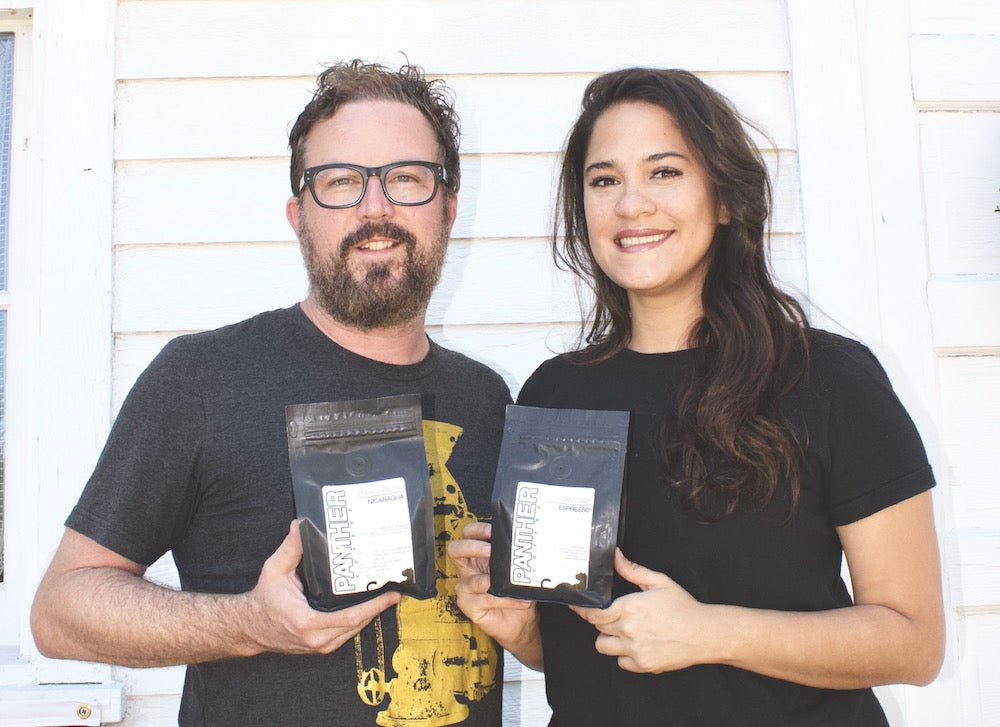
We just roasted up a fresh batch of our Papua New Guinea Kigabah Estate and Nicaragua Florencia. We’ll be roasting these beans in small batches (like always), but they tend to sell out quickly. Here are the flavor profiles:
Papua New Guinea:
This coffee is snappy and fruity – think of the fragrance from a fresh peeled orange, then add guava and star fruit. The acidity is crisp and balanced. We roast this just to second crack. The outside of the bean is a lovely mahogany color – not dark or oily. There’s enough spice to make this a complex and enticing coffee.
Nicaragua Florencia:
This coffee is dark but not dark-roasted, bearing dry fruit, caramel, and toffy. It’s really great brewed strong in a french press with a small amount of cream – the molasses and dark fruit will come through. The aftertaste is clean and simple. Overall, a great coffee from northern Nicaragua!
Get yours today!
See what we love about Portland! Be sure to click the expand button to watch it in full screen, high-def. Enjoy!